Infinitevania Review
A Brazilian love letter to Symphony of the Night and Hollow Knight—with teeth.
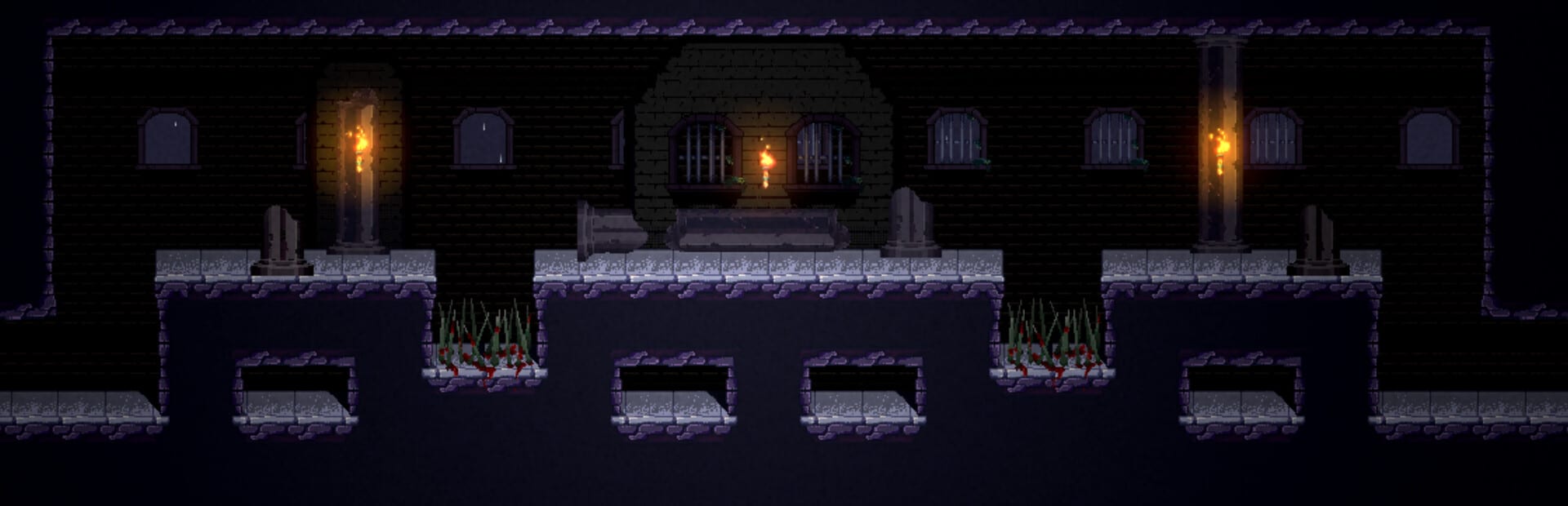
Infinitevania (JHT Games, Steam, July 24 2026) is a 2D metroidvania that wears its influences openly: Castlevania: Symphony of the Night structure, Hollow Knight-like discovery, and a Brazilian voice cast that turns dialogue into an event. This review summarizes who will love it and which systems our wiki covers in depth.
Combat and feel
Combat is the headline. Animations are responsive, bosses are theatrical, and enemies demand adaptation. If you enjoy learning patterns more than overriding them with broken loot, you are the audience. Our combat basics and boss hub exist because this is where the game plants its flag.
Exploration and progression
The map loop—block, unlock, return—is classic and satisfying. Nilbog’s shop and spirit loadouts add build identity without drowning you in menus. See builds and map for practical help.
Story and presentation
The Core fantasy is familiar, but presentation elevates it: hand-painted pixel detail, strong boss presence, and full English/PT-BR audio direction with notable voice talent. Diaries and environmental storytelling reward slow players.
Voice cast and accessibility deep dive
Launch-week reviews praise a stacked Brazilian cast with English performance (including names like Ricardo Juarez as the Elder and Luiza Caspary as Tenroh) plus color-blind support, remappable controls, and dynamic input icons. See accessibility & voice for setup. Optional death counters and totem-save friction are real UX notes—remap and pace near save points.
Wordplay and reverse-name humor (Nilbog, Melog, Tenroh, Etrom, Ahlof) give the world Brazilian personality without replacing the firm combat thesis.
Difficulty and accessibility
Expect a firm challenge. Casual players may bounce off traps and late bosses; remapping and readability options help. Start with controls and getting started.
Verdict
Recommended for metroidvania fans seeking a focused indie with sharp combat and cultural swagger. Not recommended if you want a narrative walking sim or a power fantasy that never asks you to improve. For endings and completion, use endings explained and the checklist tool.
Infinitevania is not a museum piece of references—it is a confident entry that earns its comparisons when you engage with its systems.
Practical habits for long campaigns
Infinitevania’s campaign length rewards players who maintain notes. You do not need a wiki of your own—just a list of locked doors, spirit goals, and whether you are aiming at Ending 1, Ending 2, or full Core completion. Update that list when you free Nilbog, unlock fast travel, or clear a headline boss.
When patches arrive, re-verify boss timing and shop values on Steam news, then return to the relevant wiki pages. Indie balance tweaks can change how greedy you can be in punish windows. The review and updates hubs exist to keep expectations honest: this is a firm, stylish metroidvania, not a power-fantasy autopilot.
Finally, protect your enjoyment. If a puzzle loop or trap gauntlet spikes your stress, switch to a collectible route or a build-crafting session. The game’s systems are interlocking on purpose; there is almost always another productive way to grow stronger without slamming your head on the same door.
Session planning that actually sticks
A strong Infinitevania session has three beats: a shop or spirit adjustment, a focused exploration loop, and one intentional boss or arena attempt. Players who only sprint the critical path burn out on retries; players who only vacuum side rooms stall on story gates. Alternate every thirty to forty minutes.
Keep a short written list of unfinished rooms. When a new absorb lands, do not immediately dive into the newest biome—spend a lap revisiting two older hubs. That habit alone recovers secret walls, diaries, and Ancient Heart Fragments you would otherwise discover in a miserable endgame cleanup.
Linking systems instead of grinding blindly
Souls, spirits, and map percentage are not separate games. Souls fund Nilbog. Nilbog funds survivability. Survivability funds learning. Learning funds boss clears. Boss clears fund absorbs and shortcuts. Shortcuts fund collectibles. If any link in that chain is ignored, the next boss feels artificially hard.
Use the wiki hubs as a circuit: after a death streak, open combat basics or the relevant boss page; after a successful clear, open map and items pages; before the finale, open endings explained and the completion checklist. Treat guides as tools, not novels you must finish in one sitting.
Controller, keyboard, and comfort
Infinitevania’s combat demands clean dash timing. If your hands tense up, remapping is not “cheating”—it is accessibility. Confirm jump and dash sit on comfortable inputs, then practice twenty back dashes and a short pogo chain in a safe room. Most “impossible” early rooms become readable once inputs stop fighting you.
What “ready” means before a boss door
You are ready when you can leave a dense trash room without panic healing, when you have visited Nilbog at least once since your last major unlock, and when you know which spirit role you are missing. You are not ready merely because you reached the door. Infinitevania respects preparation more than bravado.
Community footage versus wiki text
Trailers and no-commentary walkthroughs show pacing and arena shapes. Wiki pages name systems, achievements, and decision points. Use both: watch for visual memory, read for checklist clarity. Never invent mechanics that footage does not support—stick to Steam-confirmed systems like spirits, Nilbog, secret walls, dual endings, and the listed bosses.
Closing mindset
Infinitevania is a Brazilian metroidvania with sharp teeth and a generous absorb fantasy. Play curious, shop often, and treat every blocked ledge as a promise. Return to this page’s sibling links whenever you feel stuck; the answer is usually one unlock, one purchase, or one cleaner punish window away.
Frequently Asked Questions
Quick answers to the most common questions.
Is Infinitevania worth buying on Steam?
If you like medium-to-firm metroidvanias with strong combat, yes—especially during launch pricing windows.
How long is the game?
Expect a full indie campaign with extra hours for 100% collectibles and both endings.
Is it only in Portuguese?
No. Steam lists English and PT-BR full audio plus several interface languages.